
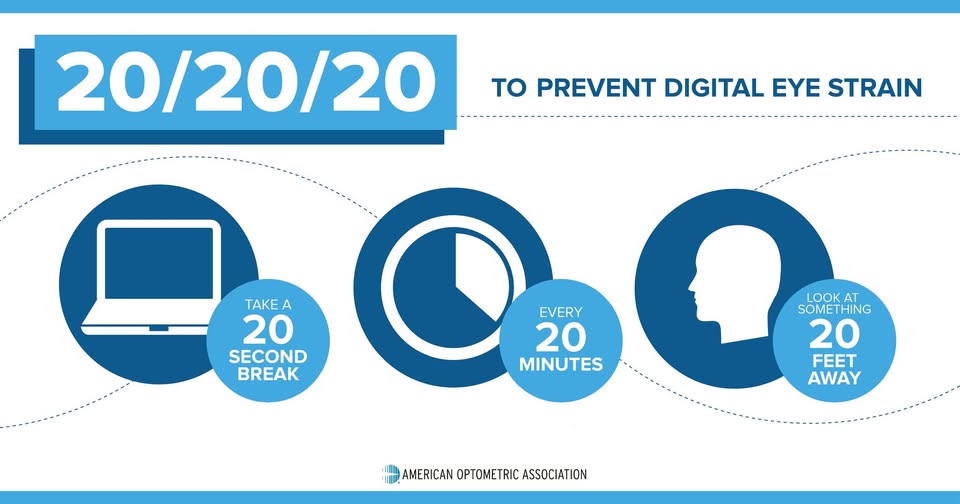
The modern world revolves around digital screens. From smartphones and tablets to laptops and televisions, people spend a large portion of their day looking at digital devices. Students attend online classes, professionals work on computers for hours, and even leisure activities such as watching movies or scrolling through social media involve continuous screen exposure. No doubt, technology has made life easier and more connected but excessive screen use has also created a growing health concern known as digital eye strain. Symptoms such as dry eyes, blurred vision, headaches, neck pain and difficulty in focusing are increasingly common among people of all age groups. One of the simplest and most effective ways to reduce this problem is the 20X20X20 rule.
The 20x20x20 rule
The 20X20X20 rule is a guideline developed by eye care experts to help reduce stress on the eyes caused by prolonged screen use. According to this rule, after every 20 minutes of screen time, an individual should look at something 20 feet away for at least 20 seconds. Though it sounds very simple, this small habit can have a significant positive impact on eye comfort and visual health.
When people use digital devices continuously, their eyes remain focused at a close distance for a long time. The eye muscles responsible for focusing become overworked, much like any other muscle in the body that is used without rest. In addition, people tend to blink less frequently while staring at screens. Normally, a person blinks around 15 to 20 times per minute, but during screen use, this rate may reduce by almost half. Reduced blinking leads to dryness, irritation, redness and a burning sensation in the eyes. The 20×20×20 rule provides short but regular breaks that allow the eye muscles to relax and encourage normal blinking.
Science behind the rule
The science behind the rule is based on the concept of visual accommodation. The eyes constantly adjust their focus depending on the distance of objects being viewed. Continuous focus on nearby screens causes strain because the ciliary muscles remain contracted for long periods. Looking at an object, 20 feet away relaxes these muscles, reducing fatigue and restoring comfort. Twenty seconds is enough time for the eyes to recover before returning to near work.
The importance of the 20×20×20 rule has grown significantly in recent years because screen time has increased dramatically. Children and teenagers now spend many hours daily using mobile phones, gaming devices, and computers. Adults working in offices may spend eight to ten hours continuously in front of monitors. Even elderly individuals use digital devices for communication and entertainment. As a result, digital eye strain has become one of the most common lifestyle-related health complaints worldwide.
Symptoms of eye stain
There are several symptoms that indicate digital eye strain. People complain of headaches, tired eyes, blurred vision, watery eyes, sensitivity to light and difficulty concentrating after prolonged screen use. Some individuals also experience neck, shoulder and back pain due to poor posture while using devices. Although these symptoms are usually temporary, ignoring them for long periods may reduce productivity, disturb sleep patterns and negatively affect general well-being.
Benefits
The 20×20×20 rule is highly beneficial because it is simple, free and easy to follow. It does not require any medicine, equipment or special training. Students can practice it during study sessions; office workers can use it during computer work and gamers can apply it during long gaming periods. Many smartphones and computers now even offer reminders or applications that encourage users to take regular eye breaks.
However, the 20×20×20 rule should be combined with other healthy screen habits for maximum protection. Proper lighting in the room is important because excessive brightness or glare can increase eye strain. Screens should be positioned at an appropriate distance, usually about an arm length away, with the top of the screen slightly below eye level. Adjusting font size and screen brightness also improves visual comfort. Maintaining good posture and ensuring adequate sleep contribute to healthier eyes and reduced fatigue.
Regular blinking and hydration are also important factors. Since screen use decreases blinking, consciously blinking more often helps keep the eyes moist. Drinking enough water and using lubricating eye drops, when necessary, can also reduce dryness. People who wear glasses should ensure that their prescription is up to date and some may benefit from lenses designed specifically for computer use.
The 20×20×20 rule also plays a role in promoting mental relaxation. Continuous screen exposure can increase stress and mental exhaustion. Short breaks not only relax the eyes but also refresh the mind, improve concentration and enhance productivity. Employees and students who follow regular break routines perform better and feel less fatigued during long working hours.
Read our full disclaimer.