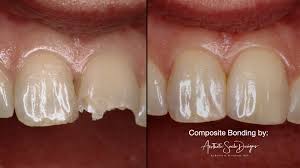
Dental bonding is a popular and cost-effective cosmetic dental procedure used to enhance the appearance of teeth and repair minor imperfections. It involves applying a tooth-colored composite resin material to the surface of a tooth to improve its aesthetics or functionality. Dental bonding is a minimally invasive procedure where a dentist applies a composite resin to the surface of a tooth. This resin is shaped accordingly, hardened, and polished to match the natural appearance of the surrounding teeth.
Anesthesia is usually unnecessary because the procedure is painless. The dentist applies a conditioning liquid to the tooth to help the resin adhere. The conditioner is washed away and a putty-like composite resin is then applied and shaped. Attending dentist hardens it with an intensive light, then finishes and polishes the hardened resin to match the natural tooth.
Uses of Dental Bonding
Dental bonding serves a variety of purposes, including:
- Improving Tooth Appearance: It masks discolorations, minor misalignments, or irregularly shaped teeth.
- Closing Gaps: Dental Bonding can close small gaps between teeth without the need for braces treatment.
- Lengthening Teeth: It can make short teeth appear longer to create a balanced smile.
- Protecting Exposed Roots: When gums recede, bonding can cover and protect sensitive tooth roots.
- Repairing Chipped or Cracked Teeth: The resin fills in cracks or chips, restoring the tooth structure and function
Limitations of Dental Bonding
While dental bonding is effective, it has its limitations:
Durability: The resin material is not as strong as natural enamel and may chip or wear over time.
Staining: The composite resin can stain more easily than natural teeth.
Longevity: Bonding typically lasts 3-10 years, depending on the location and care.
Aftercare and Maintenance
It requires proper care to ensure its longevity.
- Practice Good Oral Hygiene: Brush twice daily and floss regularly to maintain oral health.
- Avoid Staining Foods and Drinks: Coffee, tea, wine, and tobacco can stain the resin over time.
- Avoid Hard Foods: Chewing ice, biting nails, or eating hard candies can chip or crack the bonded resin.
- Regular Visits: Routine check-ups and cleanings will help monitor the condition of the bonding.
Read our full disclaimer.