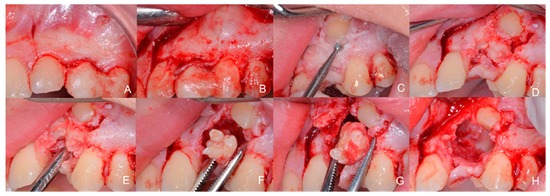
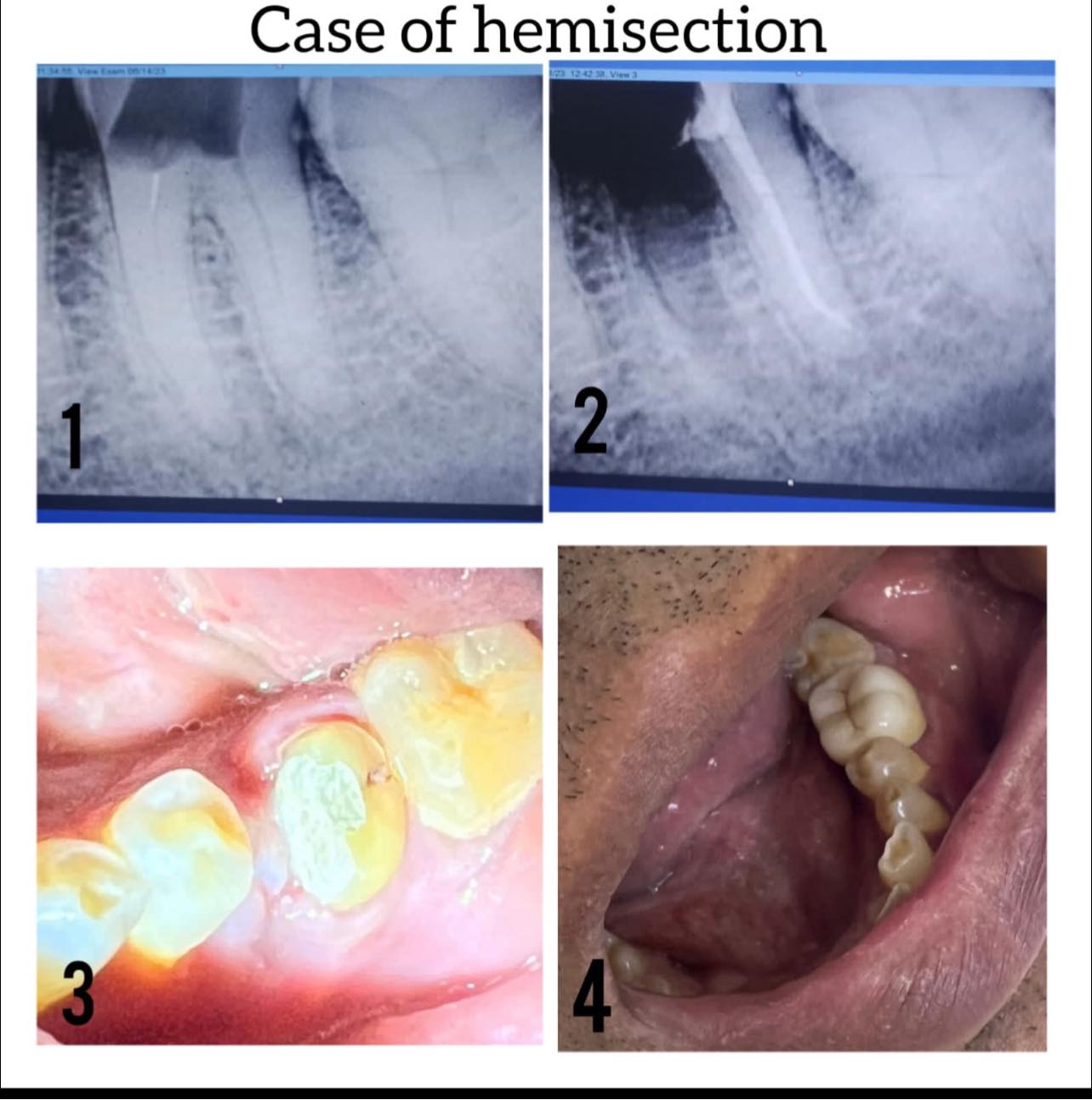
Tooth Hemisection is a specialized dental procedure that involves the surgical removal of one root. It also involves the associated portion of the crown of a molar, typically a mandibular molar. This technique is preferable when one root of a molar is unsalvageable due to advanced periodontal disease, root fracture, or endodontic failure, while the remaining root is healthy and retains sufficient bone support. Hemisection allows for the preservation of part of the tooth rather than opting for complete extraction, thereby supporting function, aesthetics, and the integrity of the dental arch.
Indications
Dentists prefer Hemisection in cases where:
- There is vertical root fracture affecting one root only but other root is sound.
- Localized advanced bone loss around one root due to periodontal disease.
- Endodontic treatment has failed on one root, but the other root remains viable.
- There is severe furcation involvement on one root.
- Localized Dental decay or resorption, non-restorable on one portion of the tooth.
By selectively removing the diseased root and its crown portion, dentists can preserve the rest of the tooth. Then the dentist restores it which continue to function as a natural support for neighboring teeth.
Procedure
Root canal therapy (RCT) is mandatory on the remaining root, either prior to or during the surgical procedure. Under local anesthesia, the tooth is sectioned using a bur to separate the crown and the roots. The affected root and its corresponding portion of the crown are removed. After healing, the dentist restores remaining tooth structure with a suitable prosthetic, often a crown or a bridge. Sometimes, it serves as an abutment for a fixed dental prosthesis.
Advantages
Conserves Natural Tooth Structure
Preserves Bone and Gingival Architecture
Maintains Functional Activity
Prognosis
With appropriate case selection and meticulous surgical and restorative procedures, the long-term success of Hemisection can be comparable to that of other tooth-saving interventions. Studies show favorable outcomes when patients have motivation and maintain good oral hygiene. Regular monitoring through clinical and radiographic examinations is essential to ensure continued success.
Read our full disclaimer.