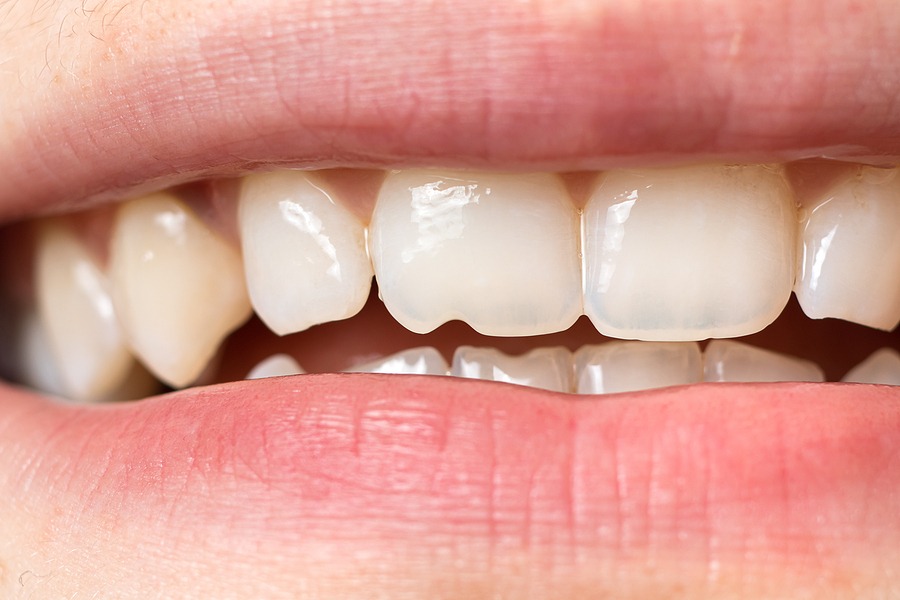
People commonly wonder if a small broken piece of tooth can grow back on its own. The answer is “no”. Once the hard outer tissue of a tooth is damaged, it cannot repair itself. Enamel is the outermost, highly mineralized layer that protects a tooth. Unlike other tissues in the body like skin or bone, enamel does not regenerate once it has lost or damaged. This is because it lacks living cells that can repair or regrow. However, a chipped tooth or small wear most of the time smooth out with time and may not always need immediate treatment.
Teeth are subjected to daily stresses of chewing, grinding, and exposure to acidic or sugary foods. Over the period of time, this may lead to:
Chipping: A small part of the tooth breaks off, usually from the edge. It generally happens due to biting something hard or an accident.
Erosion: Gradual loss of enamel due to acids (from food, drinks, or bacteria).
Abrasion: Physical wear from brushing too hard or grinding teeth.
Attrition: Natural wearing down of tooth surfaces from chewing.
No Clinical Intervention Needed
In many cases, minor wear and tear do not require treatment because the tooth remains functional and pain-free. The body adjusts to changes, for example, by forming extra dentin inside the tooth to protect the delicate pulp.
However, this does not mean that all wear and tear are harmless. Severe erosion, cracks, or decay do require clinical intervention to prevent further damage or infection.
When Clinical Intervention Is Necessary?
While minor wear and tear may not need treatment, certain situations do require professional care:
- Enamel loss: If enamel lossis significant, it can lead to sensitivity, discoloration, or increased risk of decay.
- Cracks or fractures: These can compromise the tooth structure and require bonding, crowns, or other restorative treatment.
- Decay: Cavities must be treated with fillings or other procedures to prevent further damage.
- Severe sensitivity: Dentists perform desensitizing treatment if dentin of a tooth causes discomfort due to exposure.
References
Andreasen JO, Andreasen FM, Andersson L. Textbook and Color Atlas of Traumatic Injuries to the Teeth. 4th ed. Oxford: Wiley-Blackwell; 2018
Read our full disclaimer.