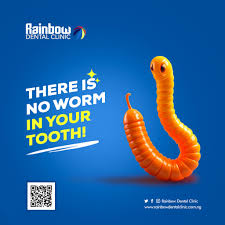
The myth of the “tooth worm” dates back to ancient times when people believed that a tiny worm dug into teeth, causing decay and pain. This idea existed in many cultures, including ancient Mesopotamia, Egypt, India, China and Europe. Before modern dentistry, people thought that removing or killing the worm would cure a toothache. However, we now know that specific bacteria cause tooth decay, not worms. We can best prevent with proper oral hygiene, diet management and dental care. The misconception likely arose due to the following reasons:
Historical Lack of Scientific Knowledge
In ancient times, people did not understand the true causes of dental diseases (such as bacterial plaque and sugar fermentation). The pain of tooth decay (like a throbbing or “gnawing” sensation) made people imagine that a tiny worm was burrowing inside the tooth.
Cultural and Folkloric Transmission
Many ancient civilizations had myths about tooth worms. These ideas were passed down through generations and became deeply ingrained in popular belief.
Misinterpretation of Tooth Anatomy
When a decayed tooth is opened, the nerve or pulp chamber can resemble a small hole or tunnel, which might have been mistaken for worm passages. The pain of pulpitis (nerve inflammation) can feel like something is moving inside the tooth, reinforcing the worm theory.
Early Medical Theories
Ancient medical systems like Ayurveda and traditional Chinese medicine sometimes referenced “tooth worms” as part of disease explanations. Even Hippocrates and other early physicians speculated about worms causing dental pain.
Modern Science Debunks the Myth
With the advancement of microbiology, especially in the 19th–20th centuries, scientists discovered that tooth bacteria are the atual culprit. The bacteria break down sugars and produce acid, which disrupt continuity of tooth enamel. No such “tooth worm” is present under a microscope.
Why Does the Myth Still Persist?
Some traditional remedies and sayings still reference tooth worm, especially in rural or less scientifically literate communities. Even today, people might jokingly refer to a “worm in the tooth” when describing tooth decay or subsequent cavities.
Read our full disclaimer.