Initially, a cavity in your tooth might not cause any discomfort at all. However, it will gradually burrow deeper into the tooth, eventually leading to noticeable, moderate pain. At this stage, painkillers might offer temporary relief. But once the decay reaches the dental pulp, the pain becomes severe and intense. It makes a visit to the dentist absolutely necessary. The dental pulp is the soft core of your tooth, containing nerves and blood vessels. When this pulp gets infected or damaged, root canal treatment comes to the rescue.
Root Canal Treatment
It is a treatment to repair and save a badly damaged or infected tooth instead of pulling it out. It might sound a bit scary, but with modern techniques and local anesthesia, it is generally no more uncomfortable than getting a regular filling.
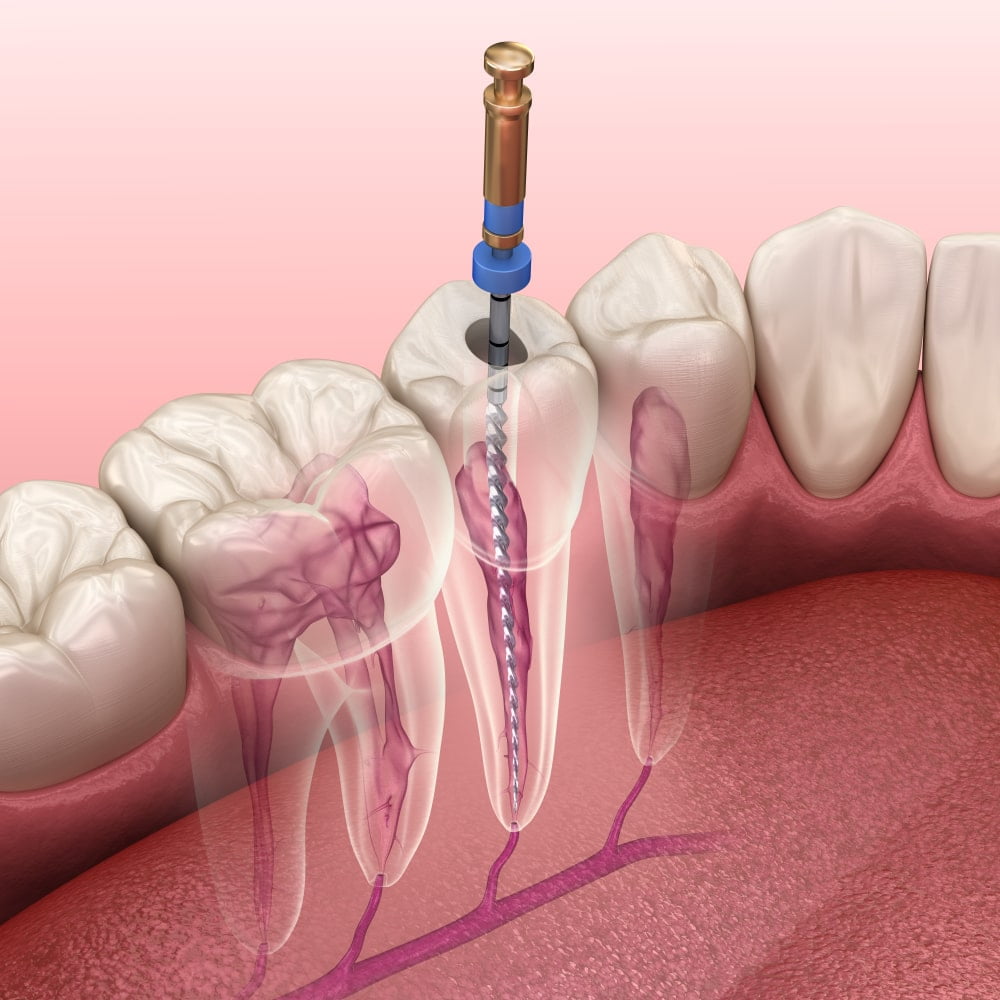
First, your dentist numbs the area around the tooth so you don’t feel any pain. Then, he/she makes a small opening on the top of your tooth to access the root canals; these are the narrow channels which contain pulp and run down through the root of a tooth. Using specialized tiny instruments, the dentist carefully removes the infected or damaged pulp, along with any bacteria and debris from the root canals.
Once the canals are thoroughly cleaned and disinfected, a dentist properly shapes them so they can be filled. After shaping, dentists fill canals with a special biocompatible material, usually a rubber-like substance called gutta-percha, and sealed with an adhesive cement. This prevents any future bacteria from getting in.
Finally, because the procedure might weaken the tooth, it usually needs a crown. A crown acts like a protective cap that covers the entire tooth, restoring its shape, strength, and appearance.
Why go through all this?
A badly infected tooth won’t heal on its own. Left untreated, it can lead to more pain, swelling, and even an abscess; a pocket of pus. The infection can also spread to other parts of your jaw and body. Root canal therapy eliminates the infection and saves your natural tooth, which is always the best option. Keeping your natural tooth helps you bite and chew properly, maintains the alignment of your other teeth, and keeps your smile looking natural.
Think of root canal therapy as a life-saving mission for your tooth. It tackles the problem at its core, removes the bad stuff, and seals it up to prevent future trouble. While the name might sound a bit intimidating, it’s a common and effective procedure that can relieve your pain and keep your smile healthy for years to come. So, if your dentist recommends a root canal, remember it’s a way to save your tooth and get back to pain-free chewing and smiling!
Read our full disclaimer.