Sleep Apnea is a sleeping disorder that affects male and female population of any age. Adult males are mostly involved. Patients with nasal blockage, enlarged tonsils, a low-hanging soft palate, or a small jaw with an overbite are more likely to experience this disorder.
Types
It may be of various types but Obstructive Sleep Apnea is the most commonly occurring one. It occurs when throat muscles interruptedly relax and block airway during sleep. Individuals having sleep apnea have multiple extended delays in their breath during sleep. These temporary breathing intervals cause low-quality sleep and adversely affect Oygen supply of the body. Loud snoring is the most noticeable sign of obstructive type.
Treatment Options
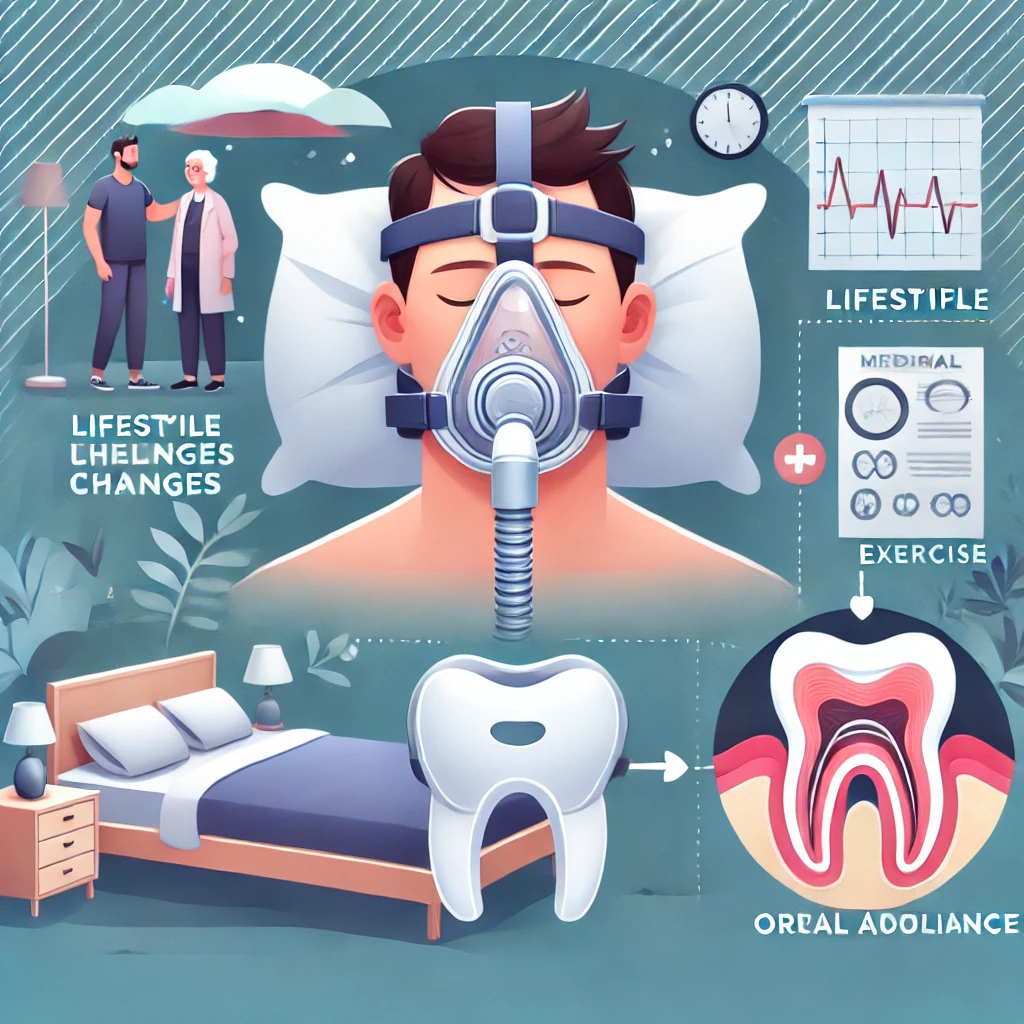
A dentist in conjunction with a sleep specialist can help the patient in managing it using oral appliances. A practicing dentist has three options to treat the obstructive sleep apnea including mandibular advancement device, mouth guard, Tongue-retaining device.
Mandibular advancement device is an amazing plastic device which snaps over the patient’s upper and lower teeth. It works by temporarily moving the jaw forward, which reduces throat constriction and prevents snoring and sleep apnea. Older age or obese patients should opt for other recommended treatment as this appliance show no efficacy in such cases.
Mouth guards are devices similar to mandibular advancement devices which help to reposition the lower jaw. However, its potential correction ability is lesser than mandibular advance device. Tongue-retaining device consists of a soft plastic splint placed around patient’s tongue. It holds the tongue forward and out of mouth throughout the night that makes mouth dry and causes discomfort.
It is essential to highlight that dentists design the aforementioned appliances to address the symptoms of Obstructive Sleep Apnea. Conversely, Central SA, a neurological disorder, necessitates a distinct approach involving tailored strategies to manage its underlying causes and associated symptoms.
Read our full disclaimer.