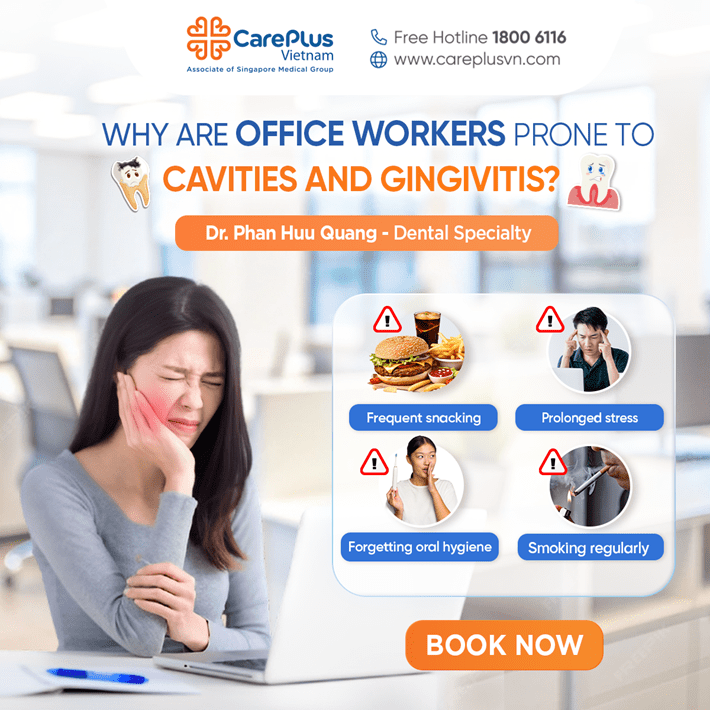
Most people think cavities and gum disease happen only because of poor brushing or eating too many sweets. However, many common office habits slowly harm oral health without people even realizing it. Long hours at a desk, frequent coffee breaks and stress-related snacking may seem harmless, but together they can create serious problems for teeth and gums.
Poor Desk Ergonomics
Desk ergonomics refers to how a person sits and works at a desk. Poor posture, especially hunching over a computer for hours, can cause tension in the neck, shoulders and jaw muscles. Many office workers unconsciously clench their teeth while concentrating on work. This constant clenching puts excessive pressure on teeth and jaw joints. Over the period of time, such office habits may lead to:
- Tooth wear and cracks
- Jaw pain and stiffness
- Headaches
- Teeth grinding (bruxism)
- Jaw joint (TMJ) disorders
Poor posture can also encourage mouth breathing, particularly when people are tired. Mouth breathing dries the mouth, reducing the protective effect of saliva. Since saliva helps wash away food particles and neutralize acids, a dry mouth increases the risk of tooth decay and bad breath.
Effects of Constant Caffeine Consumption
Coffee and tea are often considered the fuel of modern workplaces. Though moderate caffeine intake is generally safe, excessive consumption can affect oral health in several ways.
Dry Mouth
Caffeine has a mild dehydrating effect. Drinking multiple cups of coffee or energy drinks throughout the day can contribute to dry mouth, especially when water intake is inadequate.
Tooth Staining
Coffee, tea and many energy drinks contain pigments that gradually stain teeth. Over time, teeth may become yellow or brown despite regular brushing.
Increased Teeth Grinding
Caffeine stimulates the nervous system. Excessive intake may increase muscle tension and make teeth grinding more likely, especially in individuals already under stress.
Acid Exposure
Many caffeinated beverages are acidic. Frequent sipping throughout the day repeatedly exposes teeth to acid, which consequently weaken enamel and increase sensitivity.
Stress-Eating
Workplace stress drives people toward comfort foods such as biscuits, chocolates, candies, chips, and sugary beverages. These foods provide temporary emotional relief but can be harmful to oral health. When sugary or starchy foods are consumed frequently, bacteria in dental plaque feed on these substances and produce acids. These acids attack tooth enamel and increase the risk of cavities.
Sticky snacks are particularly troublesome because they remain attached to teeth for longer periods. Constant snacking also prevents saliva from restoring the normal pH between meals. Moreover, stress itself worsens oral health by reducing immunity, making gum disease more likely and triggering mouth ulcers in susceptible individuals.
Protecting Your Smile Without Sacrificing Productivity
The good news is that maintaining oral health does not require giving up work efficiency or eliminating coffee altogether.
Improve Your Workstation
- Keep your computer screen at eye level.
- Sit with your back properly supported.
- Relax your shoulders.
- Take short stretching breaks every hour.
- Become aware of jaw clenching. As a result you will consciously relax facial muscles.
Manage Caffeine Wisely
- Limit coffee and energy drinks to moderate amounts.
- Drink water after caffeinated beverages.
- Avoid sipping coffee continuously throughout the day.
- Use a straw for iced beverages, when possible, to reduce tooth contact.
Choose Healthier Snacks
Instead of sugary snacks, select:
- Fresh fruits
- Nuts
- Yogurt
- Cheese
- Raw vegetables
These options are not only healthier for the body but also less harmful to teeth.
Stay Hydrated
Water is one of the best friends of oral health. It helps maintain saliva flow, washes away food particles and reduces acid accumulation in the mouth.
Control Stress
Your Office Habits must include regular exercise, deep breathing, adequate sleep and short breaks during work can help reduce stress levels and decrease the likelihood of teeth grinding and unhealthy snacking.
References
Marcenes W, Sheiham A. The relationship between work stress and oral health status. Social Science & Medicine. 1992;35(12):1511-1520. doi:10.1016/0277-9536(92)90054-T.
Sato Y, Saijo Y, Yoshioka E. Work stress and oral conditions: a systematic review of observational studies. BMJ Open. 2021;11:e046532. doi:10.1136/bmjopen-2020-046532.
Rao SK, Bhat M, David J. Work, stress and diurnal bruxism: a pilot study among information technology professionals in Bangalore City, India. International Journal of Dentistry. 2011;2011:650489. doi:10.1155/2011/650489.
Read our full disclaimer.