Dental anthropology is a fascinating field that sits at the crossroads of dentistry, biology, archaeology and cultural anthropology. It uses teeth not just as tools for chewing but as biological time capsules; to understand human origins, evolution, health, diet, migration, and cultural practices. Teeth are the hardest structures in the human body, therefore they preserve exceptionally well in the archaeological record, sometimes outlasting all other skeletal elements. This resilience makes them powerful indicators of humanity’s past and present.
In recent years, dental anthropology has grown far beyond its traditional role in archaeology. It now plays an important part in forensic science, evolutionary biology, public health, and even modern clinical dentistry.
Teeth as Natural Archives
Every tooth carries a detailed record of an individual’s growth and development. Enamel and dentin form in layers, like rings in a tree. These layers capture markers of nutrition, hormonal fluctuations, disease, and stress that occurred during childhood.
One of the most important contributions of dental anthropology is the study of enamel hypoplasia, a defect that indicates episodes of severe physiological stress, such as malnutrition or illness. These tiny lines and grooves allow anthropologists to reconstruct the health conditions of ancient populations and compare them with modern groups.
The chemical composition of teeth, especially stable isotopes of carbon, nitrogen, and strontium, helps scientists determine what people ate and where they lived. For example, high ratios of certain isotopes can reveal whether a person’s diet was mainly plant-based, marine-based or meat-heavy. Strontium isotopes in enamel can show where an individual spent their childhood, making teeth a powerful tool for studying migration.
Teeth and Human Evolution
Dental anthropology provides some of the strongest evidence for human evolution. The shape, size, and arrangement of teeth have changed dramatically over millions of years. Early human like creature, known as hominins, had large molars and thick enamel suited to chewing tough plant material. Later species, including Homo erectus, developed smaller teeth as diets changed and cooking emerged.
Comparing fossilized teeth of early humans with those of modern populations, anthropologists trace evolutionary patterns:
a. Reduction in Tooth Size
As human ancestors began using tools, fire and eventually agriculture, the need for large chewing surfaces decreased. This long-term trend has resulted in modern humans having smaller jaws and more dental crowding.
b. Changes in Tooth Shape
Morphological features, such as shoveling of front teeth, help identify genetic relationships between populations. Shovel-shaped front teeth are highly common among East Asian and Native American groups, and studying them helps trace ancient migrations out of Asia.
c. Wisdom Tooth Depletion
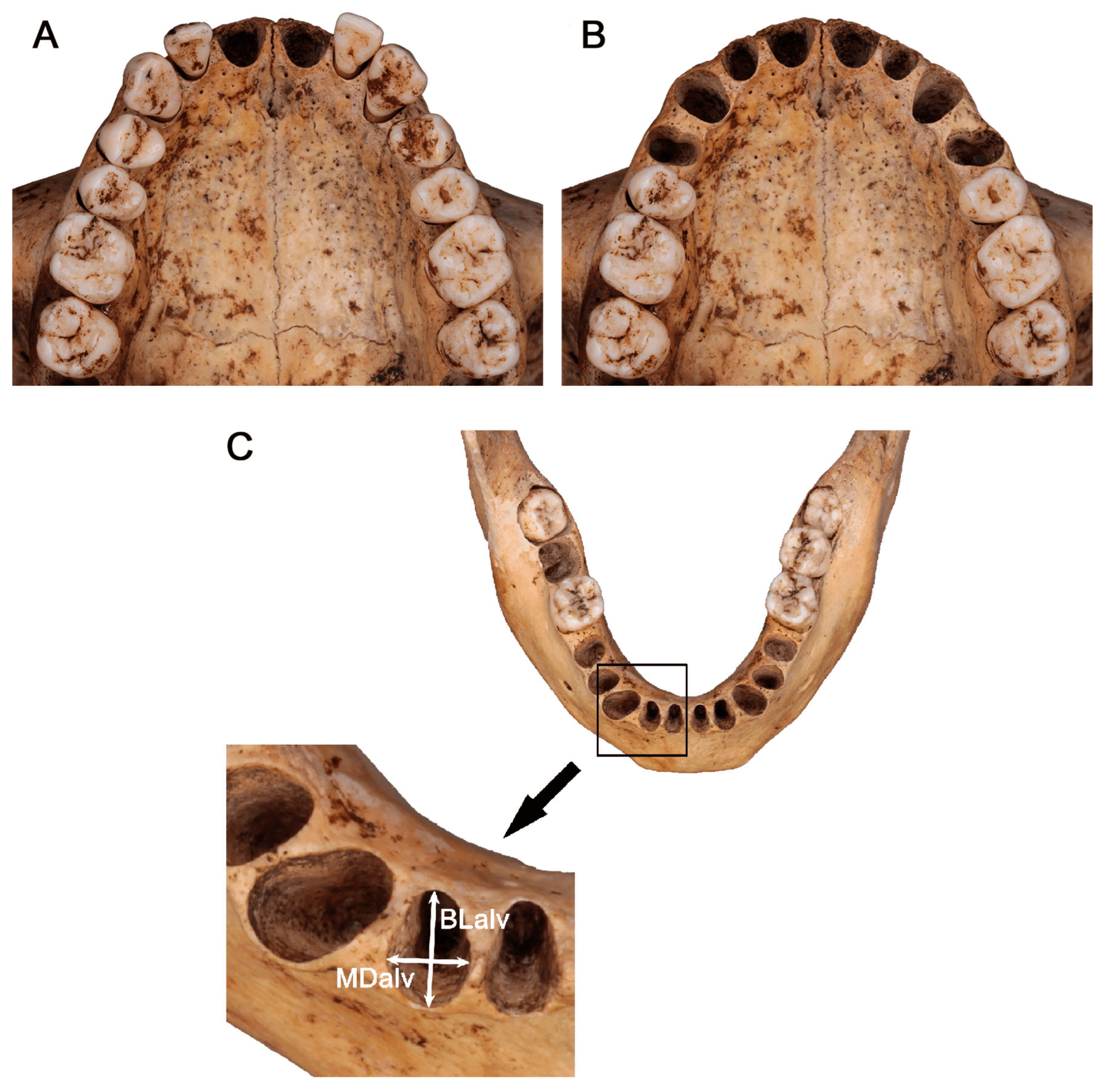
Many modern men and women lack one or more wisdom teeth due to evolutionary changes related to jaw size. Dental anthropologists study these patterns to understand genetic variation and ongoing human evolution.
Dental Modifications and Cultural Identity
Across history, human beings have modified their teeth for beauty, identity or social status. These cultural practices provide insight into beliefs, traditions, and aesthetics of diverse societies. Examples include:
Tooth filing: In African and Southeast Asian tribes, it was used for beauty or milestone rituals.
Tooth inlaying: In the Maya civilization, people used to decorate their teeth by placing colorful gems into their teeth.
Intentional tooth extraction: In various prehistoric cultures, tooth extractions were performed as a part of cultural custom.
Betel nut chewing: Its use is widespread in South Asia and the Pacific, which stains teeth and carries cultural significance.
Dental anthropology helps preserve and interpret these traditions, showing how deeply oral features are tied to identity.
Diet and Lifestyle Reconstruction
Human teeth are superb indicators of diet. Tooth wear patterns, dental decay and plaque deposits reveal what people ate and how food was prepared.
a. Tooth Wear Patterns
Hunter-gatherers are groups of people who collect food from wild plants and animals, rather than relying on domesticated sources. They represent the earliest form of human societies and serve as a foundational aspect of cultural evolution like Australian Aboriginals, San peoples of Africa and Inuit communities. They typically exhibit heavy tooth wear due to coarse foods, grit, and natural fibers but low tooth decay. In contrast, agricultural societies show different patterns linked to grinding grains and consuming softer, carbohydrate-rich diets.
b. Dental Cavities
In early agricultural communities, such as those in the Neolithic Middle East, the Indus Valley and Mesoamerica, prevalence of decay increases sharply with the adoption of agriculture. High intake of starchy crops like wheat, maize, or rice promotes bacterial growth that leads to decay. Comparing archaeological samples allows anthropologists to trace nutritional transitions across civilizations.
c. Dental plaque (Tartar)
Calcified plaque traps microscopic particles of food, pollen, and bacteria. Modern techniques allow researchers to extract DNA and proteins from calculus to reconstruct ancient diets with remarkable detail.
Teeth in Forensic Anthropology
Dental anthropology plays a crucial role in forensic investigations by helping identify unknown individuals. Teeth provide valuable clues because they resist decomposition and fire, reveal age through patterns of wear and development, show unique restorations or dental work, contain DNA in the pulp chamber.
Forensic dentists work with law enforcement to identify remains in mass disasters, accidents, or criminal cases. Age estimation techniques, like assessing root transparency, are refined through anthropological research.
Dental Anthropology and Modern Health
Although focused on the past, dental anthropology has direct relevance to modern clinical dentistry and public health. Understanding the evolutionary and cultural background of oral features helps clinicians appreciate why certain conditions, including malocclusion, impacted teeth and gum diseases, are more common today.
a. Jaw Size and Malocclusion
Modern diets of soft, processed foods reduce the need for vigorous chewing, which influences craniofacial development. This helps explain why many children require orthodontic treatment today.
b. Genetic Predispositions
Population-specific traits, such as incisor shoveling or molar cusp patterns, can help clinicians anticipate dental variations during practice.
c. Oral Microbes Studies
Ancient DNA extracted from dental calculus has transformed our understanding of how bacterial populations in the mouth have evolved. This knowledge supports better preventive strategies for gum diseases and tooth decay.
Why Dental Anthropology Matters?
Dental anthropology enriches our understanding of humanity. It bridges the gap between clinical dentistry and anthropology, showing that teeth are not just functional tools but storytellers, holding narratives of survival, adaptation, identity, and change. Their study reveals:
How humans evolved
How environments and diets shaped societies
What ancient people ate and where they migrated
How cultural practices influenced oral features
Why certain dental diseases are more common today
How to apply evolutionary insights to modern dental care
References
Cerrito P, Bailey SE, Hu B, Bromage TG. Parturitions, menopause and other physiological stressors are recorded in dental cementum microstructure. Scientific Reports. 2020;10:5381.
doi:10.1038/s41598-020-62177-7.
Smith TM. Teeth and Human Life-History Evolution. Annual Review of Anthropology. 2013;42:191–208.
doi:10.1146/annurev-anthro-092412-155550.
Sperber GH. The role of teeth in human evolution. British Dental J. 2013;215(6):295–297. doi:10.1038/sj.bdj.2013.878.
Dean MC.
Tooth microstructure tracks the pace of human life-history evolution. Proceedings of the Royal Society B. 2006;273(1603):2799–2808. doi:10.1098/rspb.2006.3583.
Read our full disclaimer.