Breathing is something we rarely think about. After all, it happens automatically. However, how we breathe, whether through our nose or mouth, can have significant effects on our oral and overall health. Mouth breathing, in particular, can lead to various dental and health concerns that are often overlooked. Mouth breathing occurs when someone habitually breathes through the mouth rather than the nose. It is normal to breathe through the mouth occasionally; such as during intense exercise or nasal congestion. Chronic mouth breathing, however, poses problems to the sufferer.
Causes
It can stem from several factors, including:
Nasal Obstruction: Blocked nasal passages due to allergies, colds, enlarged tonsils, or structural issues like a deviated septum.
Habitual Behavior: In some cases, mouth breathing becomes a learned habit, even after the initial cause resolves.
Medical Conditions: Conditions such as sleep apnea also contribute to mouth breathing.
Impact on Oral Health
Dry Mouth (Xerostomia)
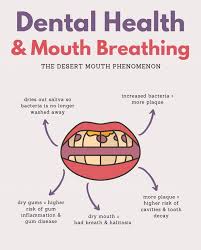
Mouth breathing reduces the production and distribution of saliva. Saliva is a vital fluid present in a human body. It cleanses the mouth as well as neutralizes acids. It also helps fight bacteria present in the mouth. Without sufficient saliva, the mouth becomes dry, increasing the risk of:
- Tooth decay
- Gum disease
- Bad breath
Changes in Tooth Alignment and Jaw Development
In children, chronic mouth breathing can influence the growth of facial structures. It can contribute to:
- Narrower dental arches
- Crowded or misaligned teeth
- Changes in facial appearance, sometimes referred to as “long face syndrome”
Seech and Swallowing Issues
It can affect tongue posture and function, leading to speech issues or improper swallowing patterns.
Effects on General Health
Beyond oral health, it has been linked to:
- Poor sleep quality
- Fatigue
- Behavioral issues in children, sometimes mistaken for attention-deficit disorders
- Reduced oxygen intake, affecting health
What to do?
Practice breathing in and out through your nose. Keep your nose clean. Reduce stress so you don’t gasp for air with your mouth. Use a larger pillow to prop your head up when you sleep. Consult an ENT specialist if nasal obstruction persists. A dentist may be helpful if you need an oral appliance to help manage the condition.
Read our full disclaimer.