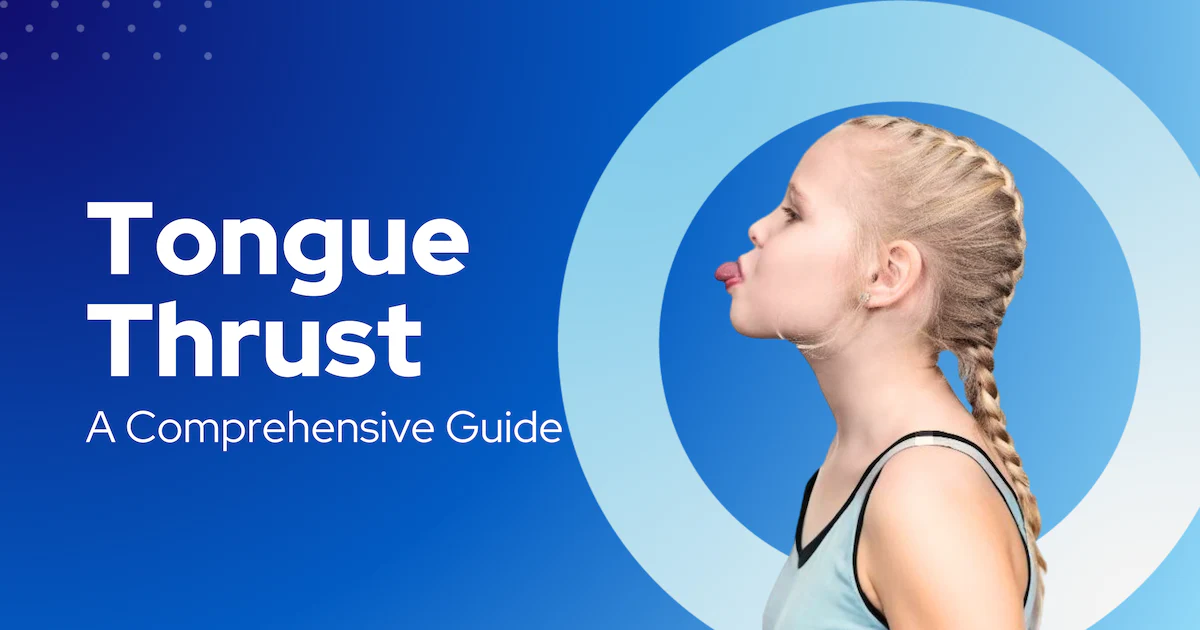
Tongue thrust is a condition in which the tongue pushes forward excessively during swallowing, speaking, or even at rest. This abnormal movement interferes with the normal functions of the tongue. During a normal swallow, the tongue pushes upward against the palate to move food or liquid towards the throat. In tongue thrust, the tongue pushes forward, often hitting the back of the front teeth. The incorrect tongue placement consequently interferes with the production of certain speech sounds resulting in a lisp. In some cases, the tongue may habitually rest in a low and forward position in the mouth, even when not swallowing or speaking.
Tongue thrust leads to a variety of dental as well as developmental problems.
Dental Issues
The constant pressure of the tongue against the teeth can cause them to shift, leading to misaligned bite or an open bite. If you’ve had braces, tongue thrust can undo the results, causing teeth to move back to their original positions.
Speech Problems
Tongue thrust can interfere with proper speech patterns, leading to difficulties pronouncing certain sounds, such as “s,” “z,” “t,” and “d.”
Swallowing Difficulties
It can also lead to an immature or improper swallowing pattern, which may affect eating and digestion.
Facial Development
In children, tongue thrust can affect the development of the jaw and facial bones, potentially leading to long-term changes in facial appearance.
Sleep and Breathing Issues
Tongue thrust can contribute to poor tongue posture, which may worsen breathing problems or sleep apnea.
Self-Esteem and Social Concerns
Speech or dental issues can sometimes lead to self-consciousness or social challenges, especially in children.
What Can Be Done?
It can often be corrected with the help of a conerned professional. Treatment options include:
Myofunctional Therapy: Exercises to retrain the tongue and facial muscles.
Braces Treatment: Braces or other devices to correct dental alignment.
Speech Therapy: To address speech issues.
Behavioral Changes: Learning proper tongue posture and swallowing techniques.
Read our full disclaimer.