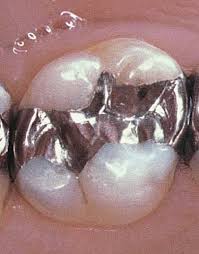
Silver amalgam filling, also called dental amalgam filling, has been a cornerstone in restorative dentistry for 200 years. Despite the emergence of newer materials, it continues to hold a significant position in the dental profession, particularly for posterior fillings. Its unique properties and proven clinical performance make it a reliable choice for many dentists.
Advantages of Silver Amalgam
Dentists appreciate silver amalgam filling’s exceptional strength, making it ideal for withstanding the high biting forces in back teeth. A well-placed silver filling lasts 10–15 years or more, outperforming many alternative materials in terms of lifespan.
Silver amalgam filling is less technique-sensitive than its alternative materials. Its ability to be placed in moist environments makes it suitable for challenging clinical situations, such as subgingival cavities or when isolation from saliva is difficult.
It has self-sealing ability as over time, silver amalgam undergoes marginal corrosion. This helps seal the tooth-restoration interface, reducing microleakage and the risk of recurrent tooth decay. The material resists wear and degradation, maintaining its function even under heavy chewing loads.
Concerns
The metallic appearance of silver amalgam makes it less appealing for patients who prefer tooth-colored restorations. Concerns about the mercury content in amalgam have led to debates about its safety. However, due to extensive research on its side- effects, American Dental Association (ADA) and the World Health Organization (WHO) and many other dental associations have confirmed that silver amalgam is safe for use.
Amalgam Still Stands Out in the 21st Century
Despite the availability of advanced restorative materials like composite resins and glass ionomers, amalgam remains a preferred option for most of the posterior restorations due to its unmatched durability, cost-effectiveness, and ability to perform well in high-stress areas. For patients with limited access to dental care, amalgam is often the most practical solution due to its affordability and long lifespan.
Composite Resin: A Newer Material with Unresolved Questions
Composite resin is an alternative to silver amalgam. It has tooth-colored appearance and adhesive properties. Composite resin, however, is less resistant to wear and fracture compared to silver amalgam, particularly in high stress posterior restorations. It is prone to shrinkage during setting hard, which may lead to marginal gaps and secondary decay. Placement of composite resin requires strict moisture control, as slight contamination can compromise bonding strength and restoration longevity.
Composite resins release toxic chemicals which has raised concerns about potential systemic and endocrine effects. Long-term toxicological studies are required to evaluate the safety of resin components and their by-products.
Silver amalgam therefore, remains a time-tested material with a proven track record of durability and cost-effectiveness for posterior restorations. In contrast, composite resin offers aesthetic advantages and adhesive properties but requires further toxicological research to address concerns about its chemical components.
Read our full disclaimer.